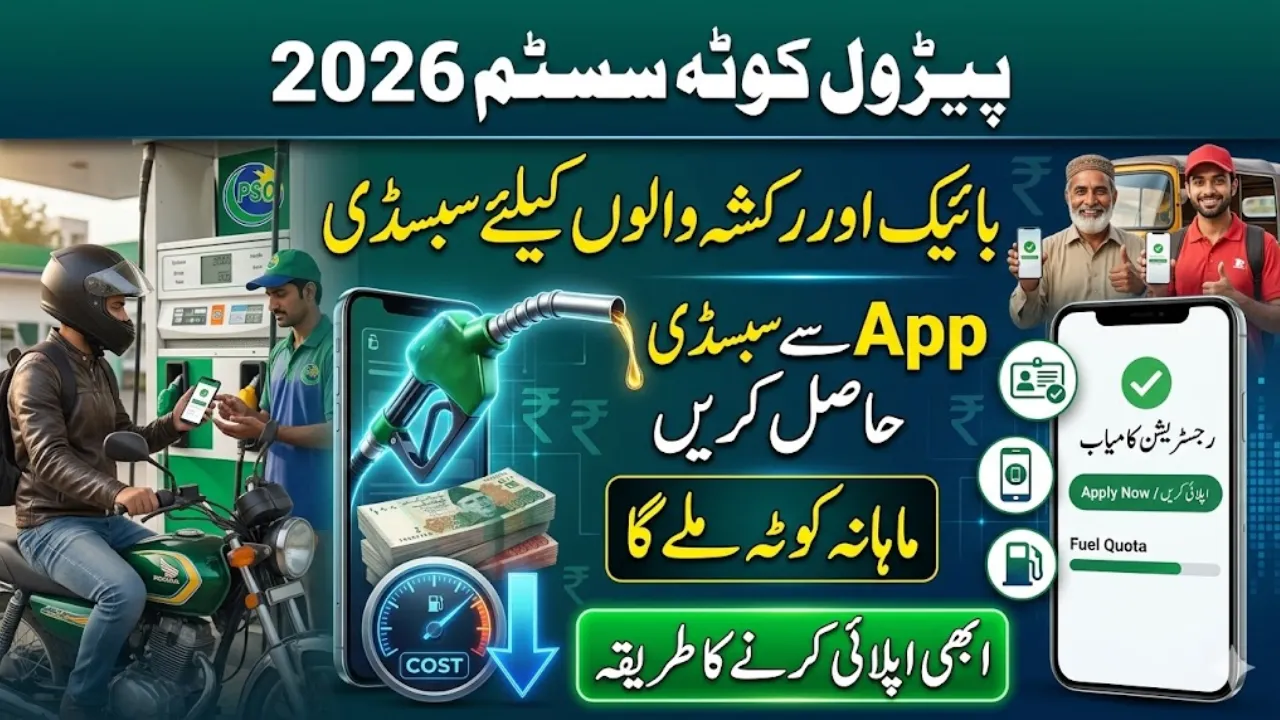
Pakistan is moving towards a smart fuel distribution system to control rising subsidies and ensure relief reaches only deserving citizens. The government’s new fuel quota system 2026 is designed to deliver targeted petrol subsidies through a mobile app, focusing mainly on motorcycles and rickshaws.
This latest move is expected to directly impact millions of daily commuters across the country.
What is the Fuel Quota System in Pakistan?
The fuel quota system is a digital, app-based subsidy model where eligible users will receive a fixed amount of petrol at subsidized rates.
Instead of giving subsidy to everyone, the government will now provide limited fuel quotas to specific vehicle owners, helping reduce unnecessary fuel consumption and financial burden.
Who Will Get Subsidy Under This Scheme?
The government is initially targeting:
- Motorcycle owners
- Rickshaw drivers
- Possible inclusion of small cars up to 800cc
🚫 Not included (likely):
- Large cars (above 800cc)
- Luxury vehicle owners
This ensures that low-income individuals benefit the most from the subsidy.
How the App-Based Fuel System Will Work
The system will be fully digital and automated:
- Users will download a government fuel app
- Register using:
- CNIC
- Vehicle registration number
- Monthly fuel quota will be assigned (example: 15–20 liters)
Step-by-Step Process:
- Open app and generate a digital voucher
- Visit petrol pump
- Show voucher to retailer
- Retailer scans/enters code
- System verifies quota
- Fuel is provided according to available quota
✔ If quota is 15L and user requests 20L → only 15L will be given
Petrol Quota & Distribution System
The quota will be:
- Vehicle-based allocation
- Limited monthly supply
- Digitally tracked
Petrol pumps will have:
- Separate nozzles for subsidized fuel
- Special devices to verify vouchers
- Real-time system integration
Government Strategy Behind This Decision
The government recently provided billions in fuel subsidies, which increased financial pressure. This new system aims to:
- Control unnecessary subsidies
- Reduce fuel imports
- Ensure fair distribution
- Promote transparency using technology
This model is similar to Pakistan’s Ramadan subsidy system, which successfully targeted deserving families.

Devices & Setup for Petrol Pumps
To implement the system:
- Each petrol pump will require 2 smartphones
- Devices will run official app for verification
- Estimated cost:
- Around Rs36,000 per device
- Retailers must register with authorities and provide focal person details
Key Benefits of Fuel Quota System
✔ Targeted subsidy for deserving users
✔ Reduced fuel wastage
✔ Transparent digital system
✔ Lower government financial burden
✔ Easy tracking and monitoring
Possible Challenges
- Internet dependency in remote areas
- App misuse or technical issues
- Initial confusion among users
- Setup cost for petrol pumps
However, the government plans training sessions and tutorials to ensure smooth implementation.
When Will the System Start?
The system is currently in final planning and testing phase. Officials are working to launch it as soon as possible in 2026, with pilot testing expected first.
FAQs
What is the fuel quota system in Pakistan?
It is a mobile app-based system that provides limited subsidized petrol to eligible users like bike and rickshaw owners.
Who will be eligible for petrol subsidy?
Motorcycle and rickshaw owners are the primary beneficiaries, while large car owners may not qualify.
How will I get subsidized petrol?
You will register on a government app, generate a voucher, and use it at petrol pumps to receive fuel within your quota.
Is the system available now?
No, it is currently in the planning phase and expected to launch soon.
Will 4-wheel cars get subsidy?
Most likely no, except possibly small cars up to 800cc.
Final Thoughts
The Pakistan Fuel Quota System 2026 is a major step toward a digital and targeted subsidy model. By focusing on motorcycles and rickshaws, the government aims to support those who truly need financial relief while controlling excessive spending.
If implemented effectively, this system could transform how fuel subsidies are delivered in Pakistan, making them smarter, fairer, and more sustainable.