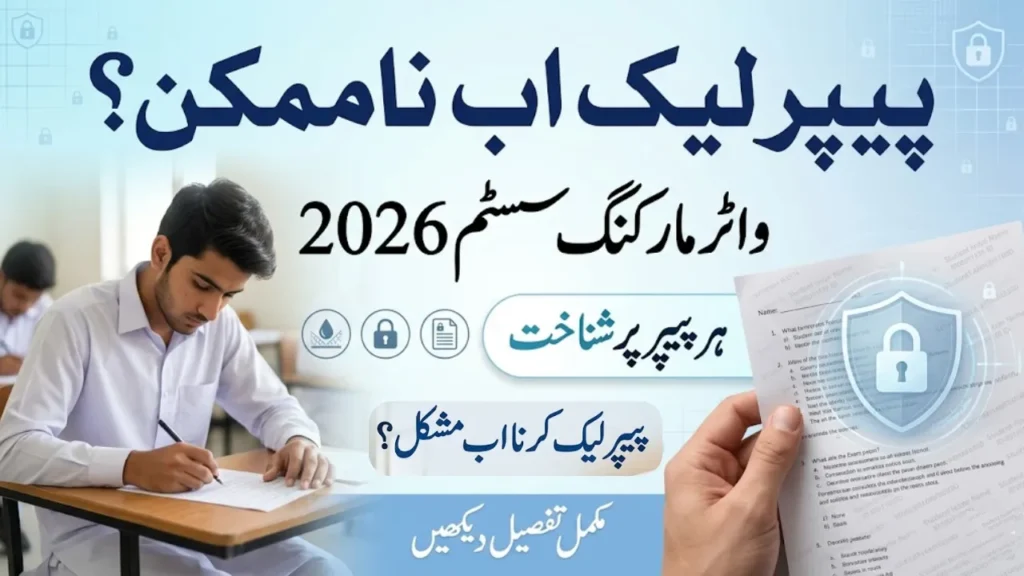
The Sindh government has introduced a modern watermarking system in examination papers to eliminate paper leaks and ensure 100% transparency. This step comes as a major reform in Pakistan’s education system, especially ahead of the 2026 board exams.
With rising concerns over cheating and unfair practices, this latest anti-leak technology is expected to change how exams are conducted across the province.
What is the Watermarking System in Exams?
The watermarking system is a smart security feature where each exam paper contains a hidden or visible unique code. This code helps authorities trace:
- The exact exam center
- The distribution point
- The person responsible if a leak occurs
This means if a paper is leaked, officials can quickly identify who leaked it and from where.
Why Sindh Introduced This System
The decision was taken after repeated incidents of paper leaks in previous years. The government aims to:

- Ensure fair exams for all students
- Stop corruption in education boards
- Improve trust in the examination system
- Hold officials accountable
Sindh Education Minister Muhammad Ismail Rahoo has clearly stated that strict action will be taken if any negligence is found.
Key Features of the New Exam System
Here are the major highlights of the new watermarking-based exam system:
| Feature | Details |
|---|---|
| Unique Watermark Codes | Each paper is traceable |
| Anti-Leak Technology | Helps identify leak sources instantly |
| Monitoring System | Complaint cell and vigilance teams |
| Mobile Ban | Phones strictly prohibited in exam centers |
| Section 144 | Enforced for security |
Exams Schedule and Implementation
For 2026 board exams:
- Over 1.35 million students will appear
- More than 1,600 exam centers established
- Exams starting from April 2026
Different boards like Karachi, Sukkur, and Larkana are also implementing e-marking systems alongside watermarking to improve checking transparency.
Benefits for Students and Education System
This new system brings multiple advantages:
- ✔️ Equal opportunity for all students
- ✔️ Reduction in cheating and unfair means
- ✔️ Faster identification of culprits
- ✔️ Improved merit-based results
- ✔️ Stronger education credibility in Pakistan
Students can now prepare with confidence, knowing that hard work will truly pay off.
Limitations and Challenges
While the system is promising, some challenges remain:
- Implementation costs for boards
- Training staff on new technology
- Ensuring strict enforcement at all centers
- Possible technical errors initially
However, authorities are confident that these issues will be managed effectively.

How Authorities Will Enforce This System
The Sindh government has also introduced strict monitoring:
- Special complaint cell at Boards Secretary office
- Surprise visits by vigilance teams
- Immediate action against responsible officials
- Zero tolerance policy on paper leaks
This shows that the government is serious about ending exam corruption permanently.
Future Impact of Watermarking in Pakistan
If successful, this system could be expanded to:
- Other provinces like Punjab and KPK
- Entry tests and competitive exams
- Digital examination systems nationwide
This could mark the beginning of a new era of transparent education in Pakistan.
FAQs
What is a watermarking system in exams?
It is a security feature that adds unique codes to exam papers to trace leaks.
Can watermarking completely stop paper leaks?
It significantly reduces leaks by making culprits easily traceable.
When will the new system start?
It is being implemented in the 2026 board exams in Sindh.
Will students be affected by this system?
No, it only improves fairness and does not impact exam difficulty.
Is this system used in other countries?
Yes, many countries use similar technologies for secure examinations.
Conclusion
The introduction of the watermarking system in exams is a powerful step towards transparent and fair education in Pakistan. With strict monitoring, modern technology, and zero tolerance for corruption, Sindh is setting a strong example for the rest of the country.
If implemented effectively, this system can completely transform the examination process, ensuring that only deserving students succeed based on merit.
Latest Updates